International Dry Needling - 2
The International DN-2 course is the second course in a two-part series by Myopain Seminars, designed to attain certification as a Certified Myofascial Trigger Point Therapist – Dry Needling (CMTPT/DN) outside the United States.
Description
The International DN-2 course is the second course in a two-part series by Myopain Seminars, designed to attain certification as a Certified Myofascial Trigger Point Therapist – Dry Needling (CMTPT/DN) outside the United States. The last day of this course includes a comprehensive theoretical and practical examination. To pass, students must score at least 70% on a multiple-choice exam and demonstrate competency in dry needling.
The course features an in-depth study of the hand muscles, several lower extremity and foot muscles, the craniofacial and craniomandibular muscles, the scalenes, longus colli, serratus anterior, latissimus dorsi, and pectoralis (over the trunk), rhomboid and serratus posterior superior, longissimus and iliocostalis, the abdominal muscles, the iliacus, and deep hip rotators.
Students will review the anatomy, function, and dry needling techniques for each muscle.
The exam is based on the required textbook and reflects the course lectures. We recommend focusing on what is known about trigger points; endplate dysfunction as part of the TrP pathology; what chemicals have been found in the vicinity of TrPs and what that means; active vs. latent TrPs; local twitch responses; referred pain mechanisms; the Cinderella hypothesis, etc., but also some anatomy, needle technique, precautions, and adverse events.
While the International DN course content is generally similar to the courses offered in the USA, the International DN courses are offered in two different formats:
Full Live Program:
- International DN-1: offered as a 5-day course
- International DN-2: offered as a 4-day course with practical and theoretical examinations on the 4th day
Hybrid Program:
- International DN-1 Hybrid: offered as a 1+4 course - 1 day of online education must be completed before the 4-day live portion of the course
- International DN-2 Hybrid: offered as a 1+3+1 course - 1 day of online education must be completed before the 3-day live portion of the course and the 1-day final theoretical and practical examinations.
The International DN courses cannot be combined with the regular DN course program.
The course organizers in each country determine the course costs and handle all registrations. Only on rare occasions will Myopain Seminars handle course registrations. The local course organizers will determine the fees for the International DN course program.
To set up Myopain Seminars courses in your country, please contact us, and we will explore the options available to you.
Courses in Kuala Lumpur, Malaysia
International DN-1 Hybrid: October 2-5, 2026
International DN-2 Hybrid: January 14-17, 2027
The courses are organized by Catalyst. To register, click here.
Courses in Dubai, UAE and Abu Dhabi, UAE
To register, contact Knowledge Bridge at info@knowl-bridge.com or +971 54 542 4154.
Myopain Seminars - India Dry Needling courses in Bengaluru, Karnataka, India
In collaboration with Recoup Health, Myopain Seminars-India offers a Dry Needling course series in Bengaluru, Karnataka, India, taught by Dr. Deepak Sharan, MD.
The course venue is RECOUP Hospital, 312, Further Extension of Anjanapura Layout, Bengalaru, Karnataka, India.
The 2026 course series in Bengaluru will be conducted on
Batch 1: DN-1 and DN-2: TBD
Batch 2: DN-1 and DN-2: TBD
Batch 3: DN-1 and DN-2: November 22-26, 2026 | DN-3: December 27-30 2026
To register for the courses in Bengaluru, click here.
Have questions about the Myopain Seminars - India Dry Needling courses in Bengaluru, India?
Contact Recoup Health at: +91-80-69274900 or via email (connect@recoup.health)
Prerequisites
Successful completion of the Myopain Seminars International Dry Needling 1 course is the pre-requisite for taking the International Dry Needling 2 course.
All participants must meet the legal requirements to use dry needling in clinical practice of the country where the courses are conducted.
Required Textbook
Trigger Point Dry Needling: An Evidence and Clinical-Based Approach, 2nd Edition By Jan Dommerholt and Fernández-de-las-Peñas.
Required Reading
Please read the following chapters from the required textbook prior to class: Chapters 7, 8, 9, 10, 11, 12, 13, 14, 15 and 16. This information will be included in the final exam.
Who Should Attend
Practicing clinicians from the following professions:
Dentists
Course CEUs
The Myopain Seminars DN courses have been approved by multiple US state boards and chapters of the American Physical Therapy Association. Often, course organizers arrange for CEUs in each country.
Course Flyers
Course Objectives
At the conclusion of this course, students will be able to
- Demonstrate at least two principal differences between dry needling of the cervical and thoracic multifidi muscles
- Demonstrate two different dry needling methods for the serratus anterior muscle
- Compare and contrast three principles of dry needling the posterior cervical muscles and the oblique capitis inferior muscle
- Demonstrate three different dry needling approaches for the rhomboid, middle trapezius and pectoralis muscles.
- Discuss the basic premise of three different trigger point hypotheses.
- Name three characteristics of the Cinderella Hypothesis relevant for trigger points.
- Discuss at least 4 different forms of muscle overload that can lead to the formation of trigger points.
- Discuss at least 4 potential adverse events that can occur when needling muscles in the region of the trunk.
- Name three key features of central sensitization.
- Demonstrate three different dry needling approaches for the rhomboid, middle trapezius and pectoralis muscles
Agupunt /Hegu
Myopain Seminars uses APS Needles by Agupunt for all dry needling and TrP Acupuncture/DN courses in the United States and select other countries.

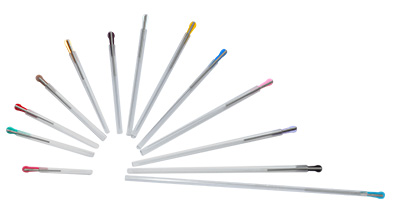
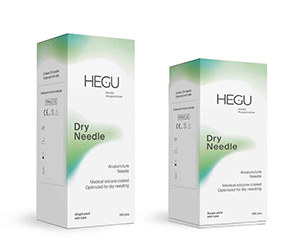
In Canada, Myopain Seminars uses Hego Dry Needling needles provided by Remington Medical for all dry needling and TrP Acupuncture/DN courses.